Which STCW refresher do I need if my certificate has expired?
Answerability for regulated training
People ask before they book.
HigherSelf helps your site answer, route, and learn.
Source-backed answer and routing systems for regulated training providers. Buyers get the right course, service, form, or human handoff. Your team gets a weekly memo showing what people were trying to decide.
- Public-source first step
- Source-backed answers
- Right route or human handoff
- Weekly memo
Built for maritime, offshore, industrial safety, aviation, certification, and compliance-heavy professional education.
The site answers the buyer. The memo shows your team what they were trying to decide.
Weekly memo
Sample weekly memo
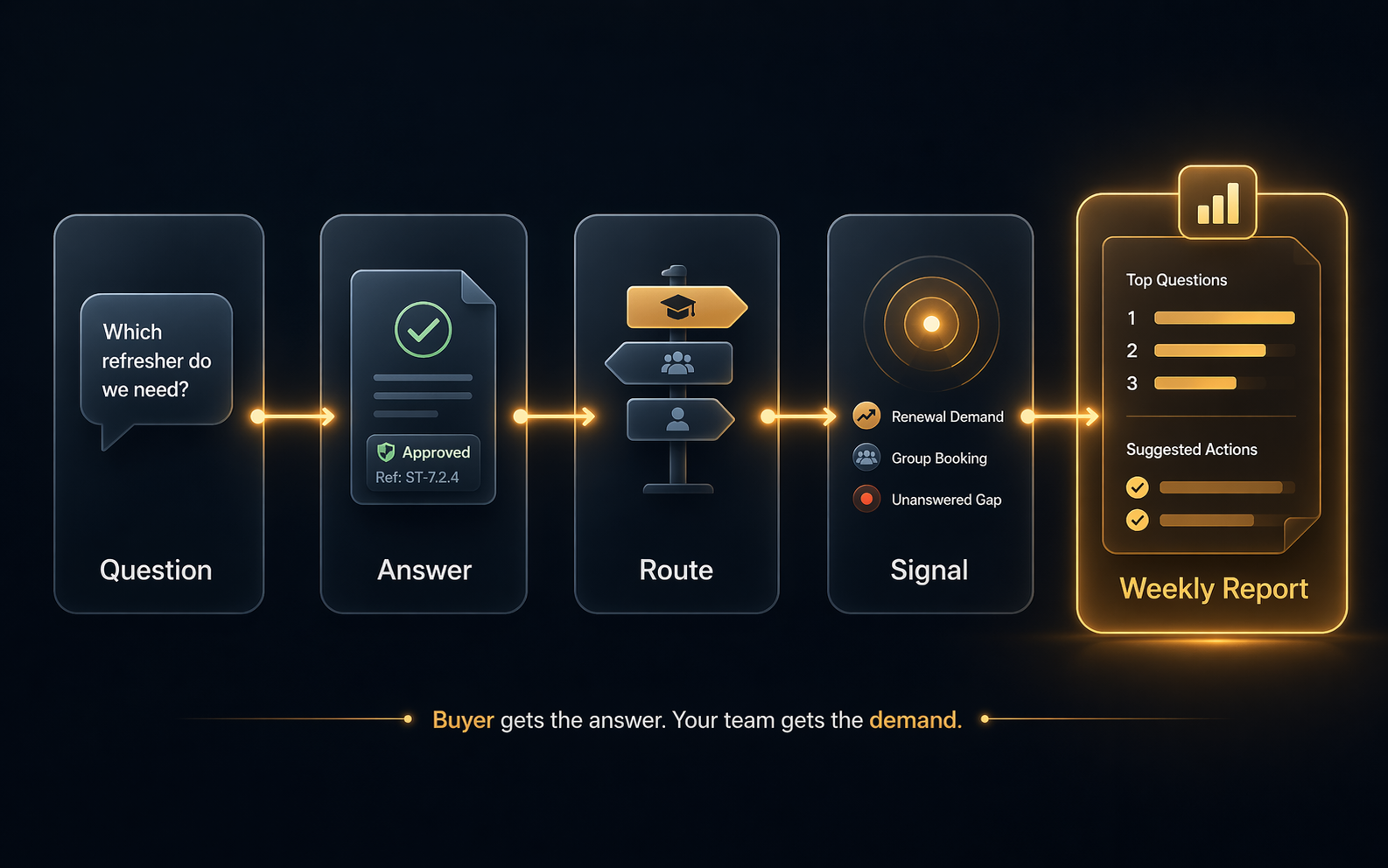
- 01Buyer questions
- 02Source-backed answers
- 03Right route or handoff
- 04Unanswered captured
- 05Weekly memo
What is answerability?
Answerability is your website's ability to answer buyer questions from trusted sources, route people to the right next step, and learn from the questions it could not answer.
Buyer question
In their words
Source-backed answer
Cited and dated
Right route or handoff
Course, service, expert, form
Weekly memo
What buyers were trying to decide
Three steps. Pick one.
Start with one route.
Most regulated training providers start with the smallest first step. Each one is concrete, scoped, and safe.
Step 1 · Public-source first step
Route Memo
I walk your public site as a buyer would and identify one buyer route that works, slows, or appears missing.
See an example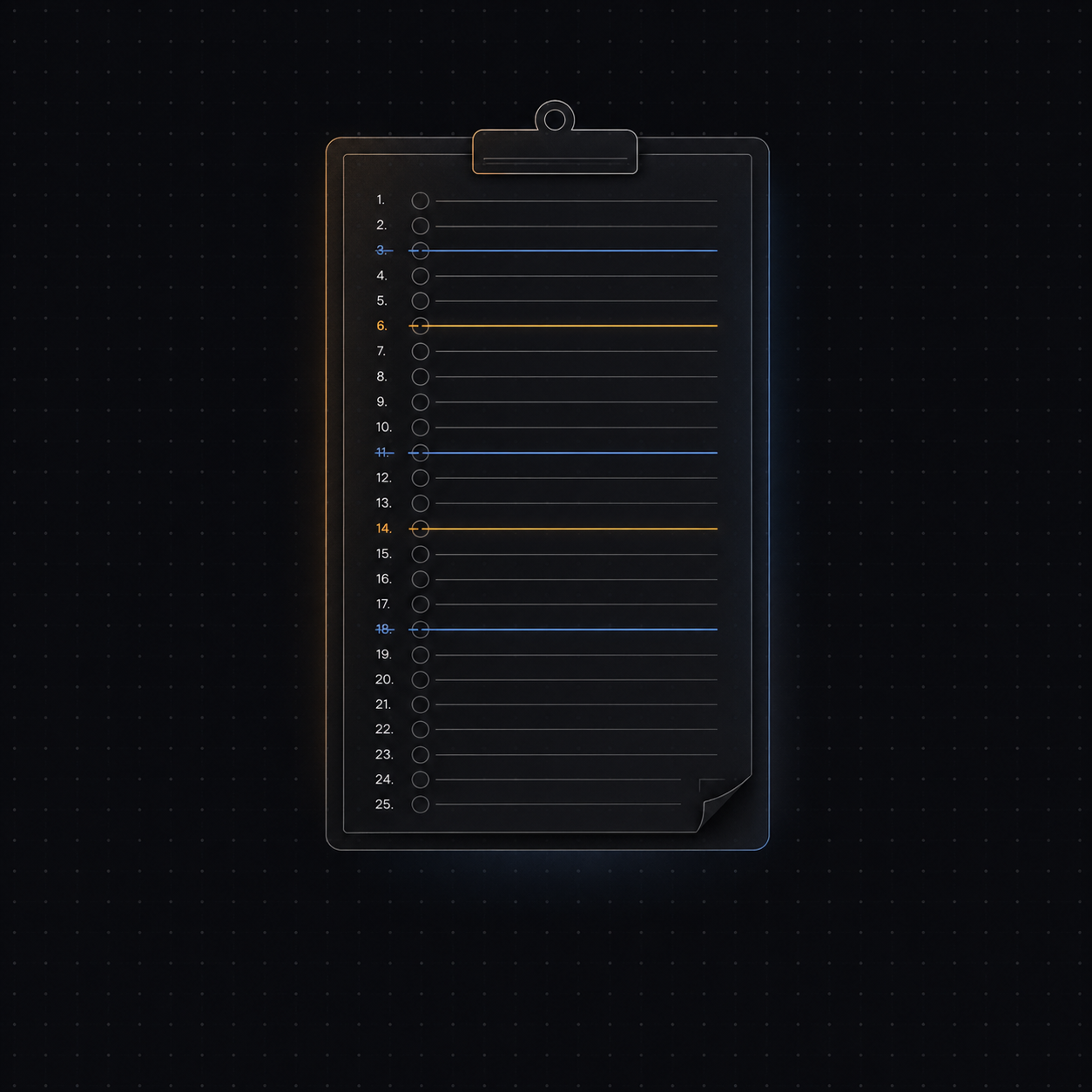
Step 2 · Diagnostic
Answerability Audit
We map 20 buyer questions against your course catalogue, source pages, routes, and human handoffs.
View the audit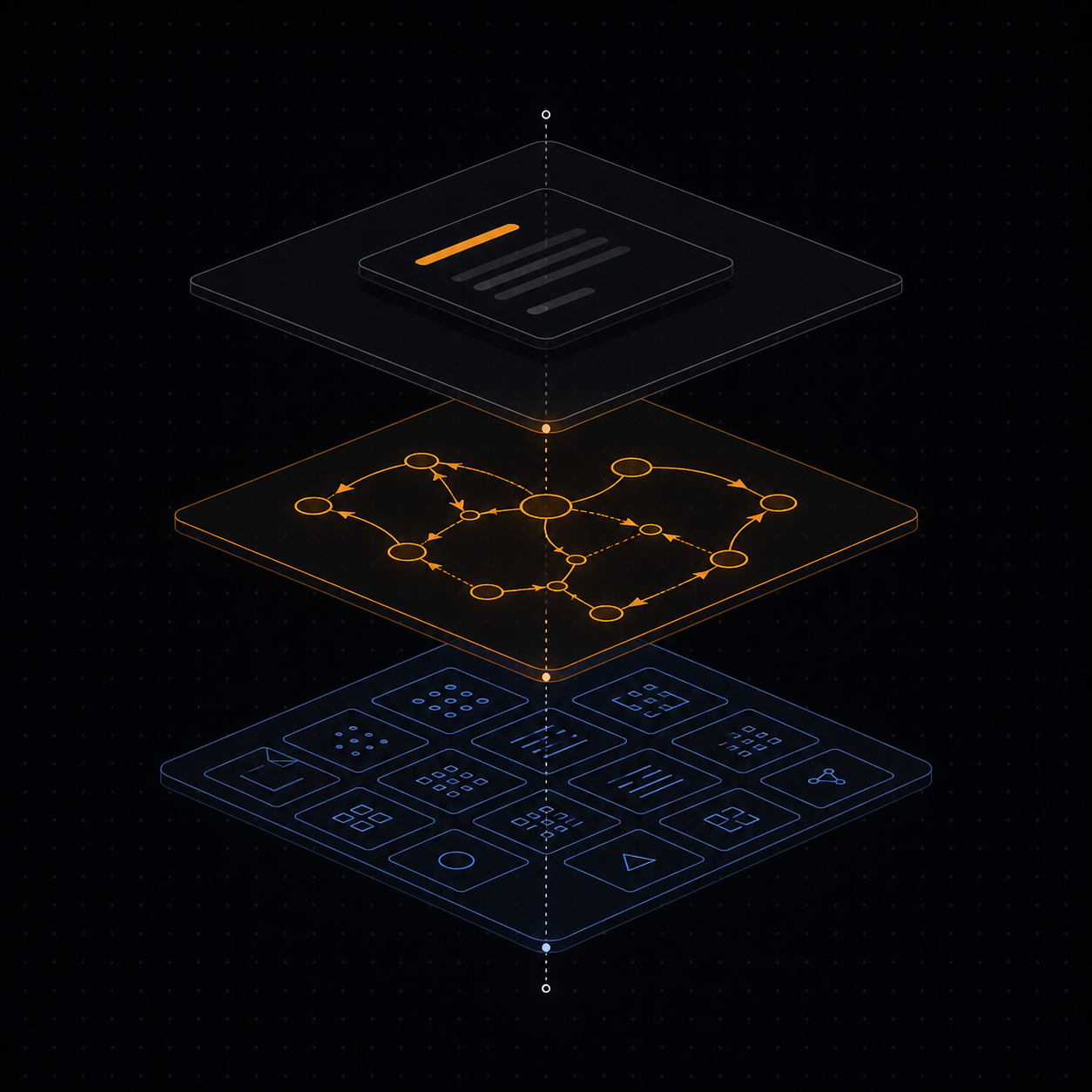
Step 3 · Pilot
Founding Sprint
We build a private answer-and-routing layer for one priority catalogue area and deliver the first weekly memo.
See the sprint"Example from a maritime training provider: single-course buyers could find course pages. Group buyers appeared to reach a generic contact route. The first page to test:
/group-bookings/."
When the route isn't clear
Your prospects ask in questions. Your site answers in categories.
Training providers organise content by course families, approvals, locations, service lines, and internal language. Buyers arrive with messy operational questions.
When the route is unclear, the question turns into repeated inbox work, wrong-fit enquiries, or invisible searches your team never sees.
Do our contractors need BOSIET, FOET, CA-EBS, a medical, or all four?
Do we need confined-space training, rescue cover, consultancy, or a risk assessment?
Which EASA course applies to this maintenance responsibility?
How answerability works
Buyer question. Source-backed answer. Right route. Captured gap. Weekly memo.
An answerability layer is connected to your catalogue, source material, review process, and commercial paths. It sits behind your brand and is written for buyers, not for crawlers.
Buyer question
The buyer asks in their own words, often before they know the course name or service line.
Source-backed answer
The layer returns a cited, reviewed, dated answer from approved catalogue, FAQ, policy, service, or document content.
Right route / human handoff
The buyer is guided to the right course, service, expert, employer path, or enquiry form.
Unanswered question captured
The questions your site cannot yet answer are recorded so the loop can close them next week.
Weekly memo
Your team receives a short weekly view of what buyers were trying to decide and what to improve next.
Course and service routing
Map buyer questions to specific courses, refreshers, consultancy paths, rescue cover, team bookings, or admissions routes.
Weekly memo
See repeated questions, zero-result gaps, routing clicks, confusing terms, and content opportunities your standard analytics miss.
Unanswered-question capture
Turn missing answers and unresolved buyer questions into a practical backlog for answer pages, catalogue fixes, and sales scripts.
Right human handoff
Send complex or high-value enquiries to the right person, without removing the human route where it matters most.
Employer and group-booking signals
Separate individual learners from employers, site managers, and procurement buyers who need team training or multi-service support.
Reviewer and source workflow
Keep trust-sensitive answers tied to source material, approval status, named reviewers, last-reviewed dates, and escalation rules.
Why regulated training is different
Eligibility, expiry, and approval language matter.
Buyers need helpful answers. Your team needs control over what is said, where it comes from, and when it should route to a human. The answerability layer is built around that.
Generic widget
HigherSelf answerability layer
Answers from a broad prompt and loose website context.
Answers from approved sources, reviewed patterns, and agreed escalation rules.
Often ends with generic advice or a contact form.
Routes to the relevant course, service, expert, employer path, or human handoff.
Hard to audit what changed or why.
Built around provenance, citations, review status, and last-reviewed dates.
Optimised for conversation volume.
Optimised for qualified routing and a useful weekly memo.
The weekly memo
The answer is for the buyer. The memo is for your team.
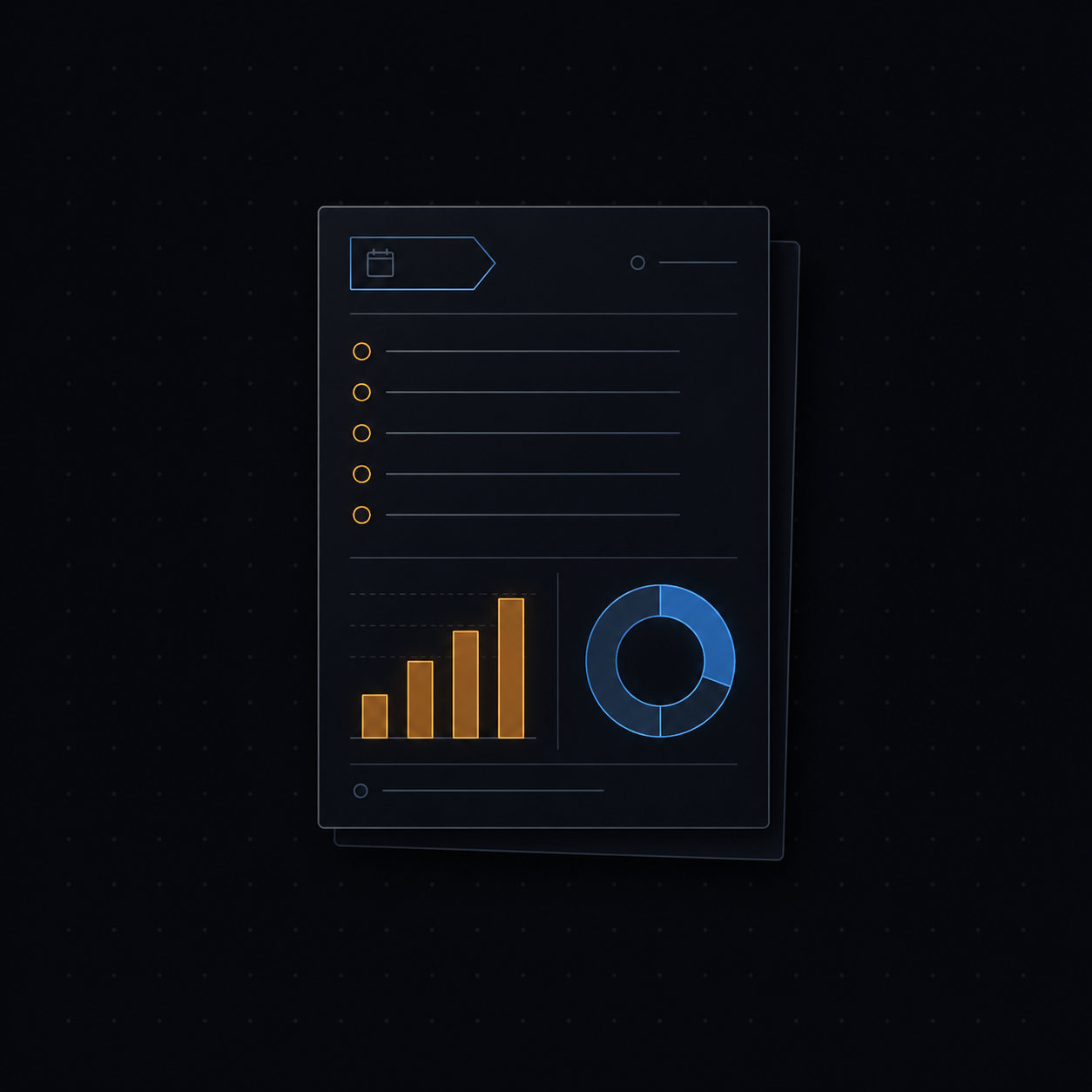
Every buyer question, routed answer, missing answer and next-step click becomes a short weekly view of what buyers were trying to decide, where the route lost them, and what your team should improve next.
Illustrative layout. Actual categories, volumes, and suggested actions reflect your catalogue and your real captured questions.
The weekly memo is built from submitted questions, clicked routes, unanswered searches and aggregate page behaviour. It does not require keystroke capture, learner surveillance or third-party ad tracking.
Weekly memo
Week 14 · Weekly memo · Sample
Sample
Top buyer questions this week
- Which refresher do I need before expiry?
- Do we need training, rescue cover, or consultancy?
- Can you train 12 staff next month?
- Which certificate applies to this role?
Signals captured
- 14course-routing searches
- 6employer or group-booking enquiries
- 5unanswered questions
- 3confusing eligibility topics
Suggested actions
- Add a refresher route page.
- Add a group-booking CTA.
- Review unsupported medical and prerequisite questions.
Step 3 · Founding Sprint
Founding Sprint.
A paid, fixed-scope private pilot for regulated training providers. It proves the answer, routing, and weekly memo pattern before a public launch or any longer-term commitment.
Included
- Private branded prototype or staging deployment
- Priority content index across course and service pages
- 25 to 50 starter questions
- Source-backed answer patterns
- Course, service, and enquiry-path routing
- Unanswered-question capture
- First weekly memo
- Day-45 review and continuation option
Not included
- No public launch without approval
- No customer-data integration in the first sprint
- No foundation-model training on your content
- No long-term commitment before the pilot proves useful
Each week you receive
- Top buyer questions
- Routed course and service interest
- Unanswered questions
- Employer and group signals
- Confusing eligibility topics
- Suggested content, routing and sales follow-up actions
Day 0
Scope the priority catalogue area
Choose one catalogue, pathway, or service area where buyers get stuck.
Days 1 to 10
Index, question, and route
Map sources, starter questions, answer patterns, and routing paths.
Days 11 to 30
Private answerability layer test
Review answer quality, route logic, gaps, and operator usefulness.
Day 45
Continuation decision
Decide whether to continue, expand, launch publicly, or stop.
Step 5 · Managed Answerability Layer
After the sprint, a managed answerability layer.
Once the sprint proves the pattern, the answerability layer is run weekly: source updates, route checks, memo delivery, and follow-up on the questions buyers keep asking. One review owner on your side. Founder-led on ours.
- What it is A managed weekly answerability layer for one priority catalogue area.
- Who it is for Providers who finished a Founding Sprint and want the loop to keep running.
- What you receive Updated source-backed answers, route checks, and a weekly memo.
- What's next A scoped continuation conversation after the day-45 review.
What we need from you
A short, honest intake keeps the sprint useful.
The sprint runs faster and produces a better memo when a small number of things are in place before day 0.
-
01
Priority catalogue or service line
One area where buyers get stuck — a course family, service type, or certification pathway.
-
02
25 common buyer questions
Real enquiries, sales notes, repeat FAQs, or operator transcripts. Rough is fine.
-
03
Source pages and documents
Course pages, policies, PDFs, approval notes, regulatory excerpts — whatever answers actually cite.
-
04
One review owner
A named person who can sign off answer patterns and last-reviewed dates.
-
05
Preferred enquiry routes
Where a qualified buyer should land — booking page, employer form, human review, or escalation.
Founder proof
From funnels to answerability.
David spent years helping businesses with funnels, launches, ads and customer acquisition. The lesson was simple: traffic is not enough when the route is unclear. HigherSelf is the next step — source-backed answers, clear buyer routes, and weekly insight into what people are trying to decide.
Public outcomes (ranking lift, enrolment lift, AI citation lift) are not claimed here until they are measured after launch and approved for publication.
Commercial-route experience.
Funnels, launches, and marketing systems delivered for clients who needed traffic to turn into customers.
Years of work helping businesses turn traffic into customers.
The recurring lesson across that work: when the route is unclear, traffic does not convert. Answerability is the next layer.
Now focused on the answer-and-route layer.
The layer that lives between buyer questions and the catalogue — built around source citations, review status, and human handoff.
Built personally by David Bentley.
One review owner on your side. One on ours. No agency middle layer between you and the work.
Current private-preview work: EASA aviation training knowledge platform for Sofema Online.
Where this fits
For training and safety businesses where “which one do I need?” is a commercial question.
The first wedge is regulated training. The same pattern applies when buyers need trusted routing between courses, services, consultancy, approvals, and employer paths.
STCW, CoC, diploma, refresher, and role-based course questions.
Help learners and employers find the right route when course names, certificates, and approvals are not obvious.
GWO, OPITO, BOSIET, FOET, CA-EBS, medicals, and team bookings.
Route operational buyers from requirement confusion to booking, group enquiry, or human review.
Confined space, rescue cover, working at height, fire safety, and consultancy.
Separate training needs from service needs when the buyer is trying to manage real operational risk.
EASA compliance, approval language, training categories, and source-cited explanations.
Make regulatory and course pathways easier to understand without removing expert review.
Eligibility, assessment routes, recognition, renewal, and policy interpretation.
Give candidates and employers clearer answers while capturing recurring confusion.
Complex catalogues where the buyer knows the problem, not the programme name.
Connect searchable expertise to the right next action without forcing a full website rebuild.
What this is not
What this is not.
HigherSelf is for serious training and safety organisations with real expertise, real source material, and a need for safer buyer-facing answers.
Not a widget
The interface is secondary. The value is in source control, answer quality, routing, and the weekly memo.
Not AI blog content
The sprint does not produce generic articles. It turns buyer questions into reviewed answer and routing patterns.
Not a marketplace
The answerability layer is private and brand-preserving. It does not force your catalogue into a public aggregator.
Not unreviewed high-risk advice
Trust-sensitive content is designed for review, citation, escalation, and explicit boundaries.
FAQ
Questions serious buyers ask before starting.
Regulated training buyers need the buying path, review model, and data boundaries to be clear before commissioning anything.
What is a Route Memo?
A short public-source review of one buyer route on your live website. I walk it as a buyer would and write a memo showing where the route works, slows, or appears missing. No source access required.
Is this a chatbot?
No. A chat or search interface may be part of the experience, but the product is an answerability layer with approved sources, review status, route logic, human handoffs, and a weekly memo.
Can it sit behind our existing brand?
Yes. The answerability layer can sit on your domain or subdomain and preserve your header, typography, brand style, catalogue structure, and enquiry paths.
What sources does it use?
Typical sources include course pages, service pages, FAQs, policies, regulatory documents, approval notes, PDF material, and selected internal source material. Source access is scoped before the sprint begins.
Who approves answers?
Your organisation approves what ships. HigherSelf can structure, draft, source, and route answer patterns, but trust-sensitive published answers should have reviewer ownership and a last-reviewed date.
Do you train foundation models on our content?
No. The founding sprint does not train foundation models on your content. Content use, storage, indexing, and output boundaries are agreed as part of the scope.
Does this replace our LMS or booking system?
No. Your LMS or booking system handles delivery and transactions. HigherSelf handles the pre-enquiry answerability layer: questions, answers, routing, capture, and the weekly memo.
How long does the first sprint take?
The first private sprint is designed around a 30-day build and test window, followed by a day-45 review. Timing depends on source access, reviewer availability, and catalogue complexity.
What do we need to provide?
A priority catalogue or service area, known buyer questions, source material, website or staging access where relevant, and one accountable reviewer or decision-maker.
What happens if we are not a fit?
You will get a direct answer. If I do not think there is a real opportunity, I will say so and suggest a simpler route where possible.
Start the conversation
Bring one route. I'll write the memo.
Start with a small public-source Route Memo. Send your website and one buyer question or route you care about. I'll tell you whether there is a useful memo, audit, sprint, or whether I would leave it alone.
If I do not think there is a real opportunity, I will say so.
Founder-led delivery
David Bentley, HigherSelf
david@higherself.ai